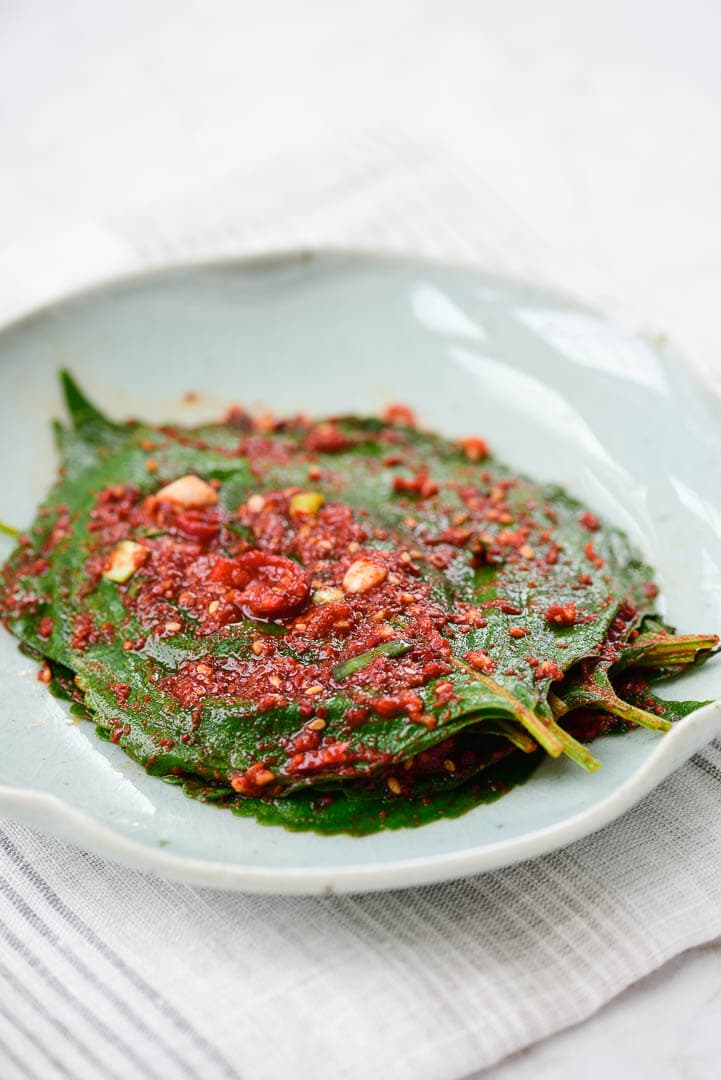
Kimchi, Korean Perilla Leaf
A delicious Korean side dish made with fresh perilla leaves, coated in a spicy, savoury and slightly sweet seasoning sauce.Kkaennip Kimchi (깻잎김치) is a traditional Korean side dish, or banchan, made by layering fresh perilla leaves with a flavourful chilli and soy sauce marinade.Unlike the more familiar napa cabbage kimchi, this version does not require lengthy fermentation. The leaves are seasoned individually and refrigerated, allowing them to absorb the rich flavours of garlic, Korean chilli flakes, soy sauce and anchovy fish sauce.The result is a wonderfully aromatic side dish with a balance of savoury, sweet and spicy flavours. It is particularly delicious served with freshly steamed rice, grilled meat or Korean barbecue.No cooking is necessary.
Ingredients
Equipment
Method
Prepare and wash the perilla leaves.
Avoid crushing or tearing the leaves while washing. Excess water should be removed before seasoning so the marinade is not diluted.
- Select fresh, undamaged perilla leaves and remove any visibly wilted or discoloured leaves.
- Fill a large bowl or clean container with cold water.
- Add 1 tablespoon of white vinegar and mix gently.
- Place the perilla leaves in the water, ensuring they are completely submerged.
- If necessary, place a small clean bowl or plate on top of the leaves to keep them underwater.
- Allow the leaves to soak for approximately 10 minutes.
- Remove the leaves and rinse thoroughly under fresh running water. Pay particular attention to the undersides, where soil and debris may collect.
- Using clean kitchen scissors, carefully trim the tough ends of the stems, leaving a small portion attached to each leaf.
- Place the washed leaves in a colander and allow them to drain thoroughly.
Prepare the vegetables
- Peel half a medium white onion and slice it into thin strips.
- Finely chop the seven Korean spring onions, including the green and white portions.
- Thinly slice the two red chillies into small rings or strips. Tip: For a milder version, remove some of the chilli seeds before slicing
- Repeat with the two green chillies. Tip: For a milder version, remove some of the chilli seeds before slicing
- Place all the prepared vegetables into a large mixing bowl.
Make the seasoning sauce.
- Add the following ingredients to the bowl containing the chopped vegetables:
- 4 tablespoons Korean red chilli flakes (gochugaru).
- 4 tablespoons Korean soy sauce.
- 2 tablespoons Korean anchovy fish sauce.
- 1 tablespoon Korean green plum syrup.
- 1 tablespoon minced garlic.
- 2 tablespoons white sugar.
- 1 tablespoon toasted sesame seeds.
- ¼ cup (60 ml) water.
- Using a spoon, thoroughly combine all the ingredients until the sugar begins to dissolve and the vegetables are evenly distributed throughout the sauce.The finished seasoning should be thick enough to cling to the leaves but fluid enough to spread easily.Taste the marinade and adjust if necessary. Add a small amount of water if it is too thick, or a little additional sugar if you prefer a sweeter flavour.
Season and layer the perilla leaves
- Prepare a clean, food-safe container with a fitted lid.
- Place one perilla leaf flat in the bottom of the container.
- Spoon a small amount of the prepared seasoning over the leaf.
- Spread the sauce gently across the leaf, ensuring it is lightly and evenly coated.
- Place another perilla leaf on top of the first.
- Repeat the process, adding a little seasoning between each leaf.
- Continue layering until all the leaves and seasoning have been used.
Arrange the leaves neatly, alternating their direction occasionally if necessary to keep the stack even.
Avoid using too much seasoning between individual leaves. As the leaves soften, moisture will be released and the marinade will spread naturally throughout the layers.
Refrigerate and marinate
- Once all the leaves have been seasoned, pour any remaining marinade over the top.
- Close the container securely.
- Place it in the refrigerator.
The perilla leaves can be enjoyed immediately, although allowing them to marinate overnight will produce a more developed flavour.
As the leaves absorb the seasoning, they will become softer, darker and more fragrant.